Fixed vs Modular Furniture: Which Is Better for Educational Institutions?
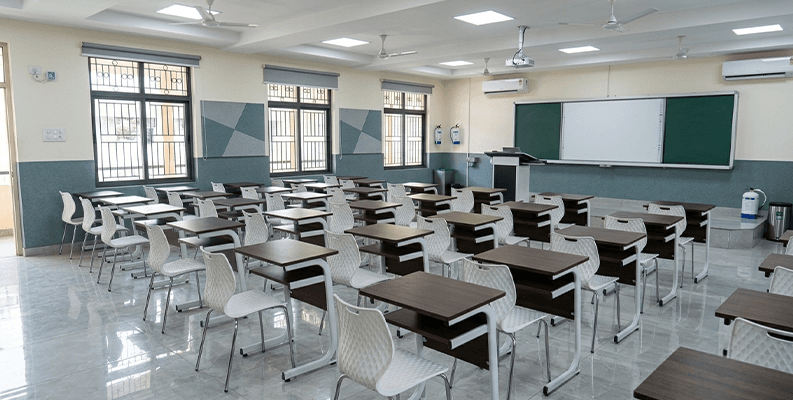
Choosing the right furniture is an important decision when planning educational infrastructure. Schools and colleges need furniture that supports everyday activities, makes efficient use of available space and meets long-term operational requirements. However, one common procurement question is whether to choose fixed or modular furniture.
Understanding the differences between fixed vs modular furniture helps school management teams, architects and procurement managers select suitable solutions based on their space, functionality and budget requirements.
1. What Is Fixed Furniture?
Fixed furniture refers to furniture designed to remain in a specific position or be permanently attached to a structure. It is commonly used in spaces where the layout and functionality are expected to remain consistent.
Examples include:
- Fixed laboratory workstations.
- Built-in storage cabinets.
- Wall-mounted storage units.
- Fixed reception counters.
- Permanent auditorium seating.
Advantages of fixed furniture:
- Provides a consistent layout.
- Can be designed around specific room dimensions.
- Suitable for dedicated spaces and specialised activities.
- Helps maintain organised furniture arrangements.
However, fixed furniture offers limited flexibility when schools need to change room layouts or repurpose spaces.
2. What Is Modular Furniture?
Modular furniture consists of individual units designed to work together in different configurations. These units can often be rearranged, expanded or relocated depending on changing requirements.
Examples of modular school furniture include:
- Movable student desks and chairs.
- Modular classroom storage units.
- Reconfigurable activity tables.
- Modular library shelving.
- Flexible workstations.
Advantages of modular furniture:
- Supports changing classroom layouts.
- Allows flexible space utilisation.
- Makes furniture rearrangement easier.
- Can accommodate future requirements.
- Offers different configuration possibilities.
Modular furniture can be particularly useful for institutions that conduct different learning activities within the same space.
3. Fixed vs Modular Furniture: Key Differences
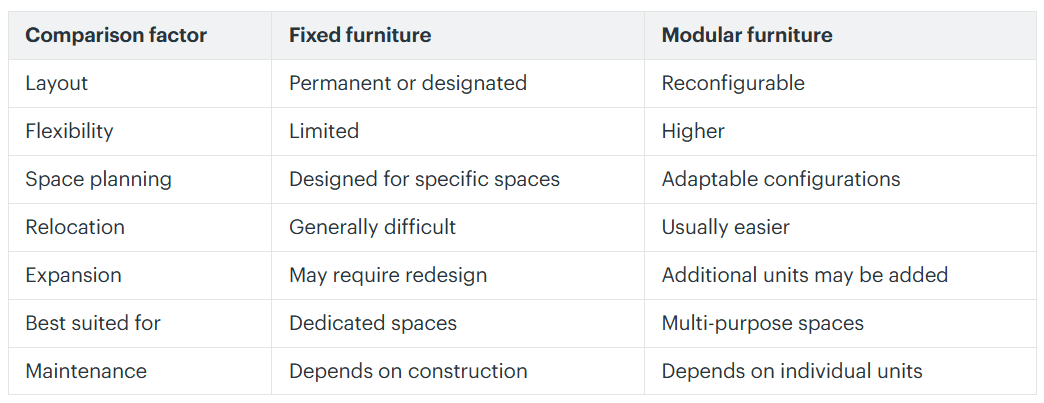
The right option depends on the intended use, room dimensions, furniture specifications and future operational requirements.
4. Which Furniture Is Better for Educational Institutions?
There is no single solution that works for every educational space. The choice between fixed and modular furniture for educational institutions should depend on how each area is used.
For classrooms: Modular desks, chairs and activity tables can support different seating arrangements and collaborative learning.
For laboratories: Fixed workbenches may be more suitable where equipment placement and dedicated working areas are important.
For libraries: Modular shelving and flexible seating can help accommodate changing storage and reading requirements.
For auditoriums: Fixed seating may be suitable where the arrangement is expected to remain consistent.
A combination of both options often provides a practical approach to institutional furniture planning.
5. Factors to Consider Before Selecting School Furniture
Before finalising institutional furniture solutions, procurement teams should evaluate:
- Space requirements: Measure each room and understand its intended purpose.
- Usage frequency: Consider how frequently furniture will be used or rearranged.
- Durability: Evaluate material quality and construction.
- Budget: Compare initial investment with maintenance and replacement costs.
- Future expansion: Consider whether additional furniture or layout changes may be required.
- Customisation: Identify specific dimensions, finishes and functional requirements.
These considerations help schools select furniture that meets both current and future operational needs.