Which Office Furniture Is Best for Small Offices?
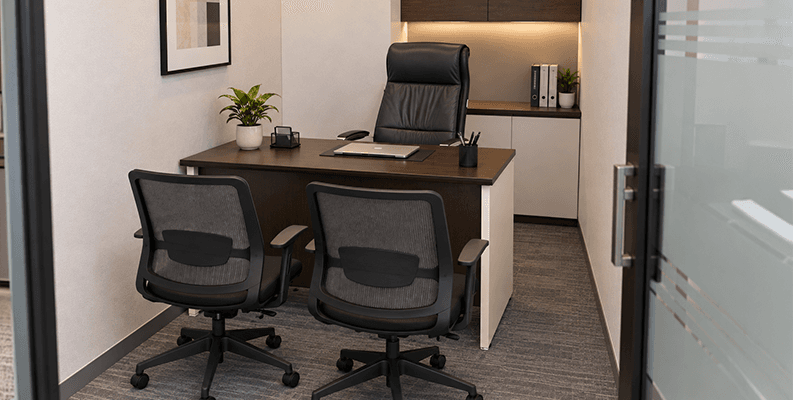
Setting up a compact workspace requires balancing floor space, employee movement, plus daily operational needs. Buying bulky traditional desks quickly creates a cramped environment, slowing down team productivity. Choosing the best office furniture for small office setups means prioritizing layout efficiency, multi-functional designs, plus visual lightness.
This guide explores practical small office furniture ideas to convert limited floor plans into high-performing, flexible corporate environments.
The Core Challenge: Floor Area vs Operational Space
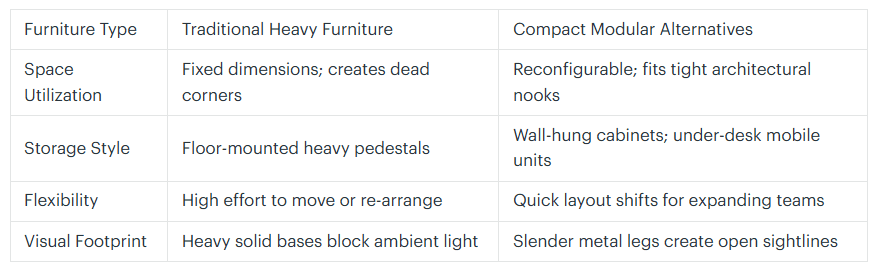
When evaluating office furniture for small spaces, every square foot counts. Traditional commercial desks leave dead corners, trap cables, plus restrict walking corridors. Modern compact office furniture fixes these issues through vertical storage, modular connectivity, plus streamlined frames.
Top Furniture Solutions for Limited Space
1. Modular Workstations & Linear Benching
Modular office furniture for small offices is essential for growing teams. Continuous linear benching systems share central structural legs plus wire trunks, eliminating the cluttered look of individual free-standing tables. A well-planned small office workstation cluster allows four to six employees to work comfortably in a fraction of the footprint required by separate cabins.
2. Space Saving Office Furniture Designs
Integrating space saving office furniture requires picking items that serve dual purposes:
- Foldaway or Mobile Flip-Top Tables: Can be linked together for group training, then folded plus stacked in a corner when floor area is needed for events.
- Mobile Storage Pedestals with Cushion Tops: Work as personal lockable filing units while doubling as temporary seats for quick team catch-ups.
- Wall-Mounted Vertical Shelving: Takes advantage of full room height rather than consuming precious walking space.
3. Ergonomic Furniture for Small Offices
Compromising on chair size should never mean sacrificing health. Selecting true ergonomic furniture for small offices involves sourcing slim-profile chairs with breathable mesh backrests, armrests that slide under desk edges, plus compact swivel bases that turn smoothly in narrow walkways.
Key Strategies for Selecting Office Furniture for Limited Space
Implementing office furniture for limited space works best when adhering to these structural layout rules:
- Maintain Clear Walking Corridors: Leave at least 90 cm to 120 cm of clear walkway behind seated workers to prevent feeling boxed in.
- Utilize Wall Space: Shift storage off the carpet. Wall-hung overhead lockers keep critical paperwork accessible without blocking floor access.
- Choose Light-Reflective Materials: Light wood tones, white powder-coated steel frames, plus glass or acrylic screens reflect light across the room, giving the illusion of an expansive floor plan.
- Build In Cable Management: Exposed wire nests make tight spaces look messy. Integrated flip-up power boxes along with vertical raceways keep cables contained inside table legs.
The Verdict: How to Build Your Compact Layout
Finding the best office furniture for small office layouts comes down to adaptable pieces that scale as your business grows. Prioritize modular benching, slender ergonomic seating, plus vertical storage systems to maintain an organized, highly productive office.
Optimize Your Small Office Layout Today
Don't let tight floor plans limit your company's growth potential. Partner with Inspace Furniture Solutions, Chennai’s leading B2B commercial furniture manufacturer. We manufacture custom modular workstations, compact storage units, plus ergonomic seating specifically built to maximize small commercial spaces.