The Complete Guide To Modular Office Furniture For Modern Workspaces In 2026
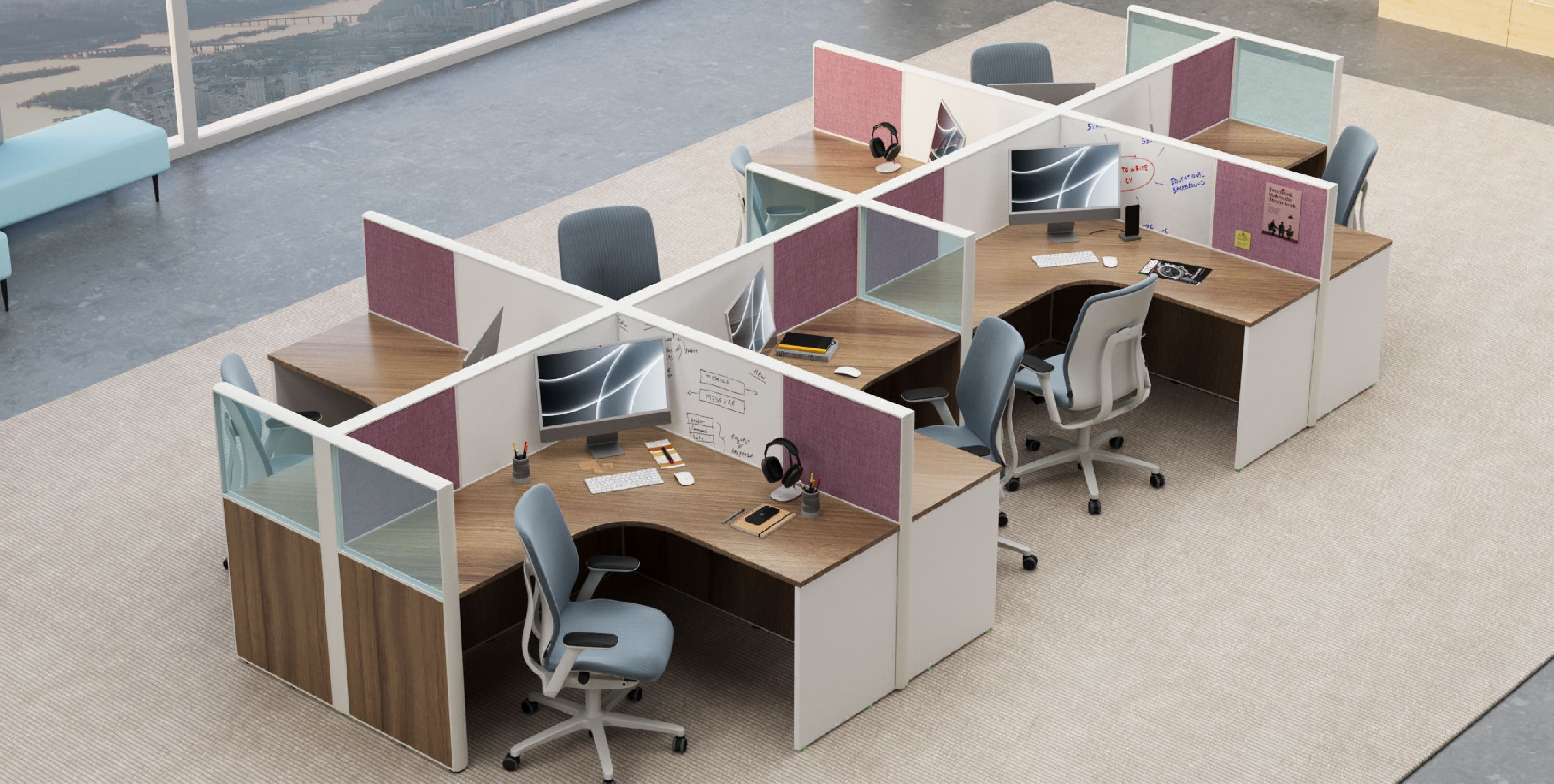
Office spaces have changed significantly over the past few years. Teams are growing, shrinking, collaborating across departments and adapting to new ways of working. In this environment, fixed layouts often become a limitation. That is why more businesses are turning to modular office furniture to create workplaces that can evolve with changing needs.
Whether setting up a new office or planning an upgrade, understanding how modular systems work helps businesses make more practical long-term decisions about space and investment, especially when exploring creating flexible workspaces with modular corporate furniture.
What Modular Office Furniture Actually Means
Modular office furniture is built using components that can be arranged, expanded or reconfigured without replacing the entire setup. Unlike traditional fixed furniture, these systems are designed to adapt as workplace requirements change.
Modern modular furniture systems can include workstations, storage units, meeting tables, partitions and collaborative seating that function together as a connected setup. This makes it easier for organisations to maintain consistency while still allowing flexibility in layout planning.
Why Workplaces Are Moving Towards Flexibility
The biggest advantage of modular design is adaptability. Offices rarely stay the same for long periods. Teams expand, departments shift and hybrid work models continue to influence how space is used.
This is where flexible office furniture becomes important. It allows businesses to adjust layouts without major renovation work. Workstation clusters can be expanded, collaboration areas can be created and meeting zones can be resized with minimal disruption to daily operations.
Many organisations today prefer modular office solutions because they support this constant evolution without requiring complete redesigns.
Designing For Function And Efficiency
When evaluating office furniture modular design, appearance is only one part of the decision. Functionality and long-term usability are equally important.
A well-planned system should support efficient space utilisation, smooth reconfiguration and durability under regular use. Integrated storage, structured cable management and ergonomic work surfaces also play a key role in improving everyday productivity.
In many cases, businesses exploring modular workstations India are also focusing on how furniture can improve both collaboration and individual performance within the same environment.
Understanding Cost And Long-Term Value
One of the most common considerations is modular furniture cost India. While modular systems may require a higher initial investment, they often deliver better long-term value.
Because components can be reused, repositioned or expanded, organisations reduce the need for frequent replacements. This flexibility helps control long-term spending while keeping workplaces adaptable to future needs.
Over time, this approach often proves more efficient than repeatedly investing in fixed furniture setups.
Choosing The Right Solution For Your Workspace
With increasing demand for modular office furniture India, businesses now have access to a wide range of options. However, selecting the right solution goes beyond product catalogues.
It is important to evaluate how well a system supports future changes, workspace planning and daily usability. The most effective solutions are those that balance design, durability and adaptability in equal measure.
For example, many organisations compare options across best modular office furniture brands to understand which providers offer long-term scalability rather than short-term solutions.
Building Workspaces That Can Evolve
Modern offices are no longer static environments. They are flexible systems that need to support changing work styles, team structures and business priorities.
This is why reconfigurable office furniture is becoming a key part of workspace planning. It allows organisations to respond quickly to change without disrupting productivity or investing in complete redesigns.
As workplaces continue to evolve, modular office furniture is shifting from a design preference to a practical necessity. Its ability to adapt, scale and reorganise makes it one of the most effective solutions for modern business environments.
Investing in the right system today ensures that workplaces remain ready for future changes while maintaining efficiency, comfort and functionality.