How to Choose the Right School Furniture Supplier for Your Institution
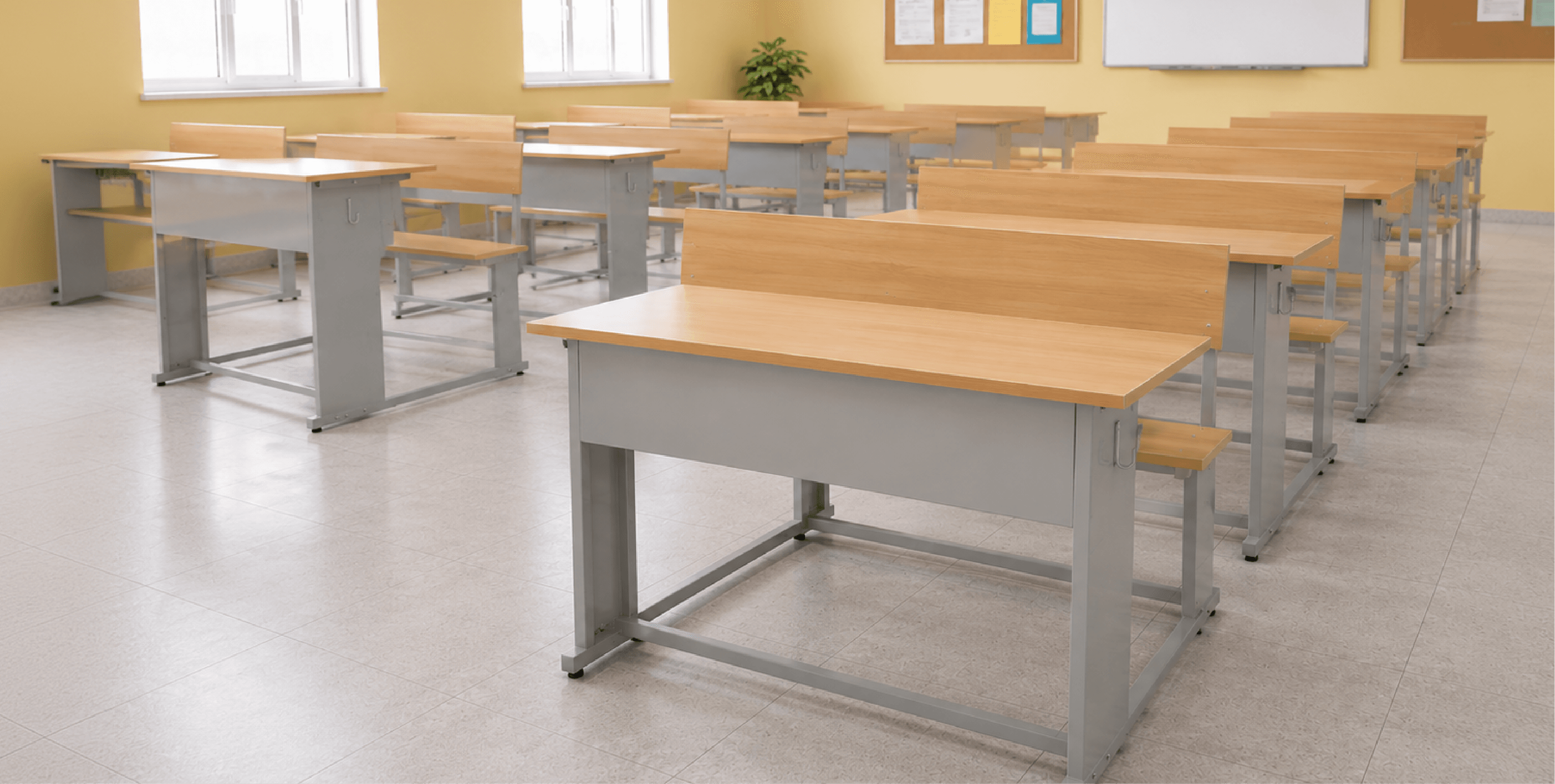
School furniture is a 10-to-15-year decision. Buy from the wrong supplier and you won't know it at delivery, you'll know it when a frame joint fails in year two, or when after-sales calls go unanswered. The right supplier matters more than the furniture spec itself. Here are the 5 criteria that separate reliable suppliers from the rest, a 10-question checklist to use before you sign, and the real cost of getting this wrong.
5 Criteria That Define a Reliable School Furniture Supplier
1. In-House Manufacturing - Not Reselling
Many 'suppliers' in India are traders who source from third-party factories and resell. An in-house manufacturer controls quality at every stage, material sourcing, production, inspection, and dispatch. Ask directly: "Can I visit your manufacturing facility?" A genuine manufacturer will say yes immediately.
2. Education-Specific Experience
A company that primarily makes office furniture and 'also does schools' is not the same as a specialist. Look for 10+ years of education-focused manufacturing, a portfolio across institution types (primary, secondary, higher education), and references from schools comparable to yours in size and board affiliation.
3. Certifications That Are Verifiable
The two certifications that matter most for Indian school furniture:
- ISO 9001:2015 - Governs quality management across the entire manufacturing process. Ask for the certificate, not just a claim.
- BIS compliance - Required for government procurement and increasingly expected for new private school construction. Verify documentation before signing.
A supplier who mentions certifications verbally but cannot produce paperwork is a red flag.
4. Ergonomic Design by Age Group
Students sit for 5 to 6 hours a day. Furniture that isn't sized correctly for their age group causes fatigue, poor posture, and reduced concentration. Ask any supplier to show you their size chart across age groups, seat height, desk height, seat depth. If they can't, they haven't invested in ergonomics seriously.
5. End-to-End Service: Design, Installation, and After-Sales
Delivery-only suppliers leave you managing third-party installers, handling damage between truck and classroom, and chasing manufacturers when something goes wrong post-installation. A supplier who manages the entire project site survey, 2D layout, manufacturing, installation by their own teams, and warranty support gives you one point of accountability for the full lifecycle of the furniture.
10 Questions to Ask Before You Sign Any Purchase Order
Print this. Take it to every supplier meeting. If a supplier hesitates on more than two of these, that hesitation is your answer.
- Do you manufacture in-house? Can I visit your facility before I commit?
- What percentage of your production is education furniture specifically?
- Can you share ISO or BIS certification documents right now, not later?
- Show me your ergonomic size chart across different age groups.
- Can you provide a 2D layout of my specific classrooms before I place an order?
- Who does your installation your own teams or third-party contractors?
- Give me the exact material spec: frame gauge, laminate grade, powder coat micron thickness.
- What does your warranty cover, and who do I call when I need to use it?
- Can you give me three references from schools similar in size and board to ours?
- Put your delivery timeline and installation completion date in writing is that agreed?
Procurement Mistakes Schools Make Most Often
Choosing on price alone
Furniture that costs 20% less upfront but fails in 3 years costs more than furniture that lasts 12. Calculate total cost of ownership replacement, disruption, and reinstallation not just the purchase price.
Skipping the factory visit
Showroom samples are curated. Production output is real. A half-day factory visit before signing a large order is the single most effective quality check available to you. If a supplier resists this, walk away.
No written specifications in the purchase order
"Good quality" is not a contract term. Your PO must include material specs (frame gauge, laminate grade, finish micron thickness), delivery timeline, installation scope, and warranty terms in writing. Verbal promises are not enforceable.