How to Choose and Arrange Library Furniture for Schools and Colleges
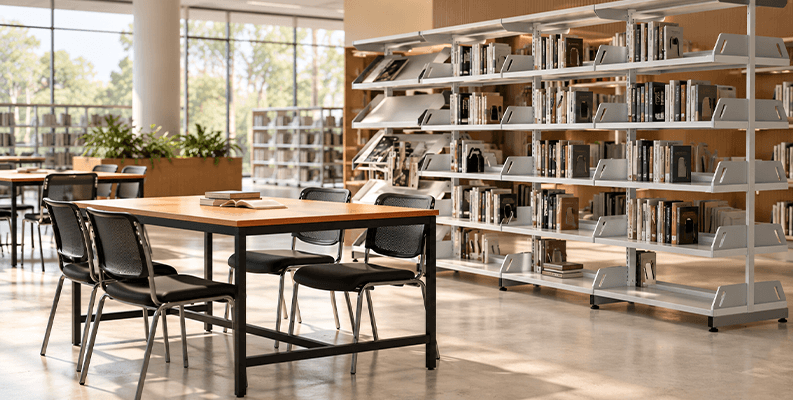
A modern academic library is no longer just a quiet room filled with books. Today, libraries in schools and colleges serve as multi-functional hubs for collaborative group work, individual research, digital learning and quiet contemplation. Designing an effective learning environment requires balancing traditional storage needs with flexible, student-centric layouts.
Whether you are designing a primary school reading room or outfitting a university central library, choosing the right educational institution library furniture and optimizing your spatial layout is essential for creating an engaging academic sanctuary.
Library Furniture Selection and Layout Framework
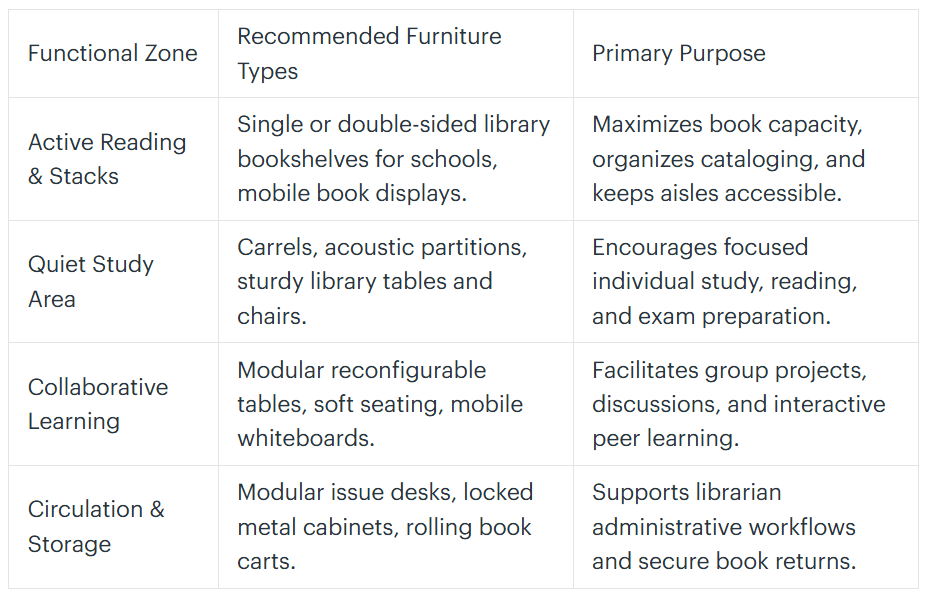
When planning your library layout and evaluating options from library furniture suppliers in India, use this structured planning guide to assign the right furniture to specific functional zones:
1. Selecting Durable Library Bookshelves and Storage Units
The core structural component of any educational library is its shelving system. High-traffic institutional libraries require sturdy, long-lasting library storage solutions that maximize book storage while ensuring reader safety.
- Heavy-Duty Construction: Choose heavy-gauge powder-coated Cold Rolled Close Annealed (CRCA) steel shelves or high-grade pre-laminated boards. Metal shelves resist sagging under heavy loads of encyclopedias and textbooks.
- Safety & Stability: Shelving units must feature anti-tip wall brackets or floor anchoring. Smooth rounded edges prevent accidental injuries and keep book bindings intact.
- Adjustable Shelving: Opt for height-adjustable shelves to accommodate books of varying heights, from oversized art manuals in universities to picture storybooks in primary schools.
2. Choosing Ergonomic Library Tables and Chairs
Seating and work surfaces directly influence how long students can comfortably research and study without physical strain or fatigue.
- Quiet Study Tables: Standard rectangular study tables or individual study carrels give students dedicated space for laptop work and note-taking.
- Ergonomic Seating: Pair study desks with contoured chairs that offer proper back and lumbar support for long reading sessions.
- Height-Appropriate Sizing: School library furniture requires age-appropriate seat and table heights, whereas college library furniture requires standard adult proportions with built-in cable management for laptops and devices.
3. Mastering the Library Furniture Layout for Maximum Flow
An optimized library furniture layout creates clear traffic pathways and minimizes noise disruptions between different activity areas.
- Zonal Separation: Place high-noise areas like group discussion tables and circulation desks near the entrance, while positioning quiet study carrels and reading bays deeper inside the space.
- Aisle Widths & Accessibility: Maintain clear pathways between book racks (at least 3 to 4 feet wide) to allow easy browsing, wheelchair accessibility and smooth movement for book trolleys.
- Sightlines & Supervision: Arrange low-height shelving units in central areas and taller book racks against perimeter walls. This layout maximizes natural light and gives librarians clear sightlines across the room.
4. Key Factors in School Library Design vs. College Libraries
Planning a library requires tailoring the space to the age group and research habits of the students who use it.
Primary and Secondary Schools
A vibrant school library design focuses on inspiring young readers. Incorporate low-level double-sided book racks, colorful soft poufs, face-out display stands for new arrivals, and group reading circles to encourage early reading habits.
Colleges and Universities
Higher education libraries require heavy-duty, commercial-grade furniture built for long study hours and digital research. University layouts prioritize single-seater study carrels with integrated power outlets, collaborative multimedia pod tables and extensive high-density storage bays.
5. Partnering with the Right Library Furniture Manufacturer in India
Sourcing furniture in bulk requires partnering with an experienced manufacturer capable of delivering custom dimensions, high durability and on-time installation.
Directly sourcing from an established library furniture manufacturer in India ensures:
- Factory-Direct Value: Eliminates middleman markups and allows institutional buyers to secure volume-based pricing for campus projects.
- Customization Options: Enables schools to select specific wood finishes, frame colors and custom module sizes to match institutional branding.
- Quality Compliance: Direct manufacturers offer warranties and build products compliant with Indian durability and safety standards.